
What is Anxiety and What Can I Do About it?
Anxiety Therapy in Champlin, MN
If you’re here, there’s a good chance anxiety has been showing up in your life lately. Maybe your thoughts won’t slow down. Maybe your body feels on edge even when nothing is technically “wrong.” Or maybe you’re exhausted from holding it all together on the outside while your mind races on the inside.
I want to talk to you directly for a moment—because anxiety isn’t just a diagnosis. It’s an experience. And if you’re living it, you know how overwhelming it can feel.
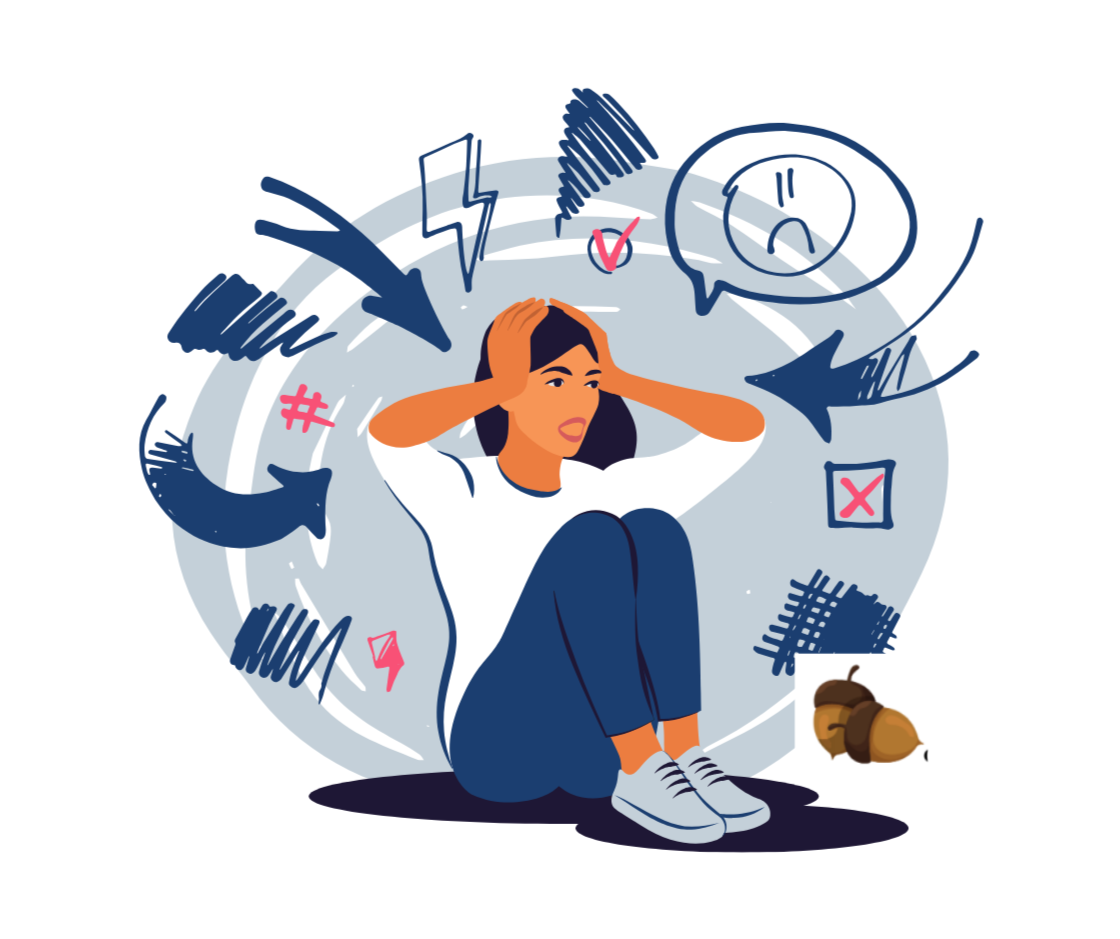
Cartoon image of a woman with her hand on her head surrounded by arrows, squiggles, and various other symbols symbolizing the overwhelming nature of anxiety.
When the Mind Starts Racing
Imagine this.
It’s evening. You finally sit down after a long day. The house is quiet. This should be the moment you relax.
But instead, your mind starts moving.
Did I say the wrong thing in that meeting?
What if I forgot something important?
What if something goes wrong tomorrow?
What if I can’t handle it?
One thought turns into five. Five turns into twenty. Your brain starts scanning for problems—real ones, possible ones, even unlikely ones—just in case.
You tell yourself to stop thinking. You try to distract yourself. Maybe you scroll your phone, turn on the TV, or make a to-do list.
But the thoughts keep coming.
And then your body joins the conversation.
What Anxiety Feels Like in the Body
Anxiety isn’t just “in your head.” It’s a full-body experience.
You might notice:
A tight chest or shallow breathing
A racing or pounding heart
A knot in your stomach or nausea
Tight shoulders, jaw, or headaches
Feeling restless, wired, or unable to sit still
Trouble falling or staying asleep
Exhaustion—even when you haven’t done much physically
Your nervous system is acting like there’s danger nearby, even if you’re sitting safely on your couch.
This is your brain’s alarm system working overtime.
The problem isn’t that your system is broken.
The problem is that it’s stuck in “on” mode.
The Overwhelm Spiral
When anxiety sticks around, something else often happens.
You start second-guessing yourself.
You overthink conversations.
You avoid things that feel uncertain.
You try to control everything so nothing goes wrong.
And underneath it all is a quiet fear:
What if I can’t handle life the way everyone else seems to?
Here’s what I want you to know:
Anxiety doesn’t mean you’re weak.
It often means your mind is working very hard to protect you.
It just learned to do that by anticipating worst-case scenarios.
Why Anxiety Feels So Relentless
Your brain’s job is survival. When it senses stress, uncertainty, or past experiences that felt overwhelming, it shifts into protection mode:
Scan for threats
Plan for every possible outcome
Stay alert
Don’t relax
That constant mental activity is your nervous system trying to keep you safe.
But over time, the system forgets how to turn off.
That’s when anxiety starts running the show instead of helping you.
The Good News: Anxiety Is Treatable
One of the most hopeful things I tell my clients is this:
You don’t have to live this way. There is hope.
In therapy, we don’t just talk about your worries—we work with the system underneath them.
You can learn how to:
Calm your nervous system, not just your thoughts
Interrupt the racing-mind cycle
Feel more grounded in your body
Respond to stress instead of reacting automatically
Build confidence that you can handle what life brings
Over time, many people notice:
Their thoughts slow down
Their body feels more relaxed
They sleep better
They stop living in constant “what if” mode
And maybe most importantly—they start feeling like themselves again.
If This Sounds Like You
If you’re constantly on edge…
If your mind won’t slow down…
If you’re exhausted from managing anxiety alone…
You don’t have to figure it out by yourself.
Reaching out for therapy isn’t a sign that something is wrong with you.
It’s a sign that you’re ready for things to feel different.
If you’re looking for anxiety therapy in Champlin, MN or the surrounding area, I’d be honored to talk with you about what you’re experiencing and how we can help your nervous system—and your life—feel calmer again.
You deserve a mind that can rest.
You deserve a body that feels safe.
And you deserve support while you get there.
If you’re ready to take the next step, contact Oak Haven Counseling to schedule a consultation for anxiety therapy in Champlin, Minnesota.